
How Graphene Improves Thermal Management Materials in Electronics and Batteries
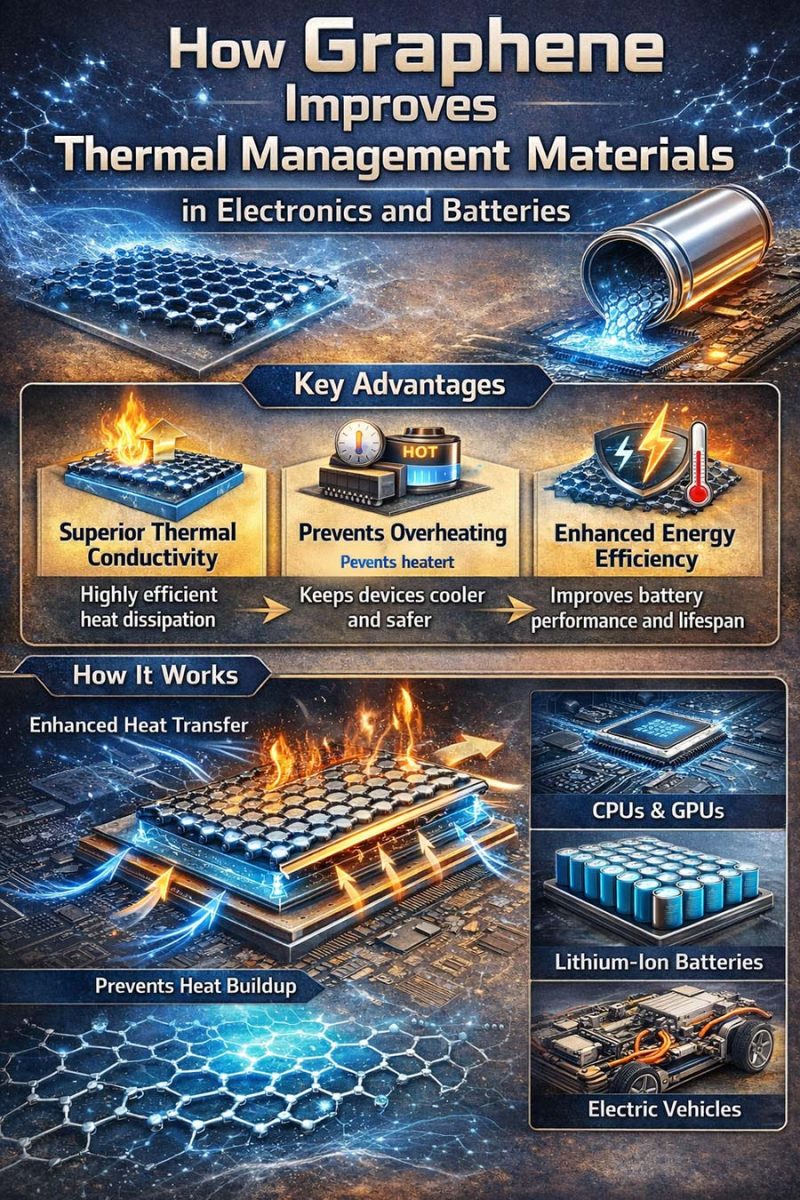
Not just about high conductivity on paper
In electronics and batteries, thermal management materials are selected for how they behave in an actual structure, not just for one impressive lab number. Graphene is attractive because it can support heat transfer while also helping with lightweight design, flexibility, or composite reinforcement depending on the system.
How it helps in real formulations
In thermal pads, films, coatings, and composite matrices, graphene may improve heat spreading efficiency when it forms an effective conductive network. The result depends on filler morphology, orientation, interface resistance, and how well the material integrates with polymers or other fillers. In other words, the raw material matters, but processing matters too.
Typical use cases
Battery packs, power electronics, LED modules, thermal interface materials, and heat-dissipation components are common areas of interest. Some teams want maximum thermal conductivity, while others are balancing thermal performance with weight, flexibility, dielectric behavior, or cost.
What experienced buyers check first
Ask whether the material was optimized for thermal systems or simply repurposed from a general-grade graphene product. It is also smart to ask about loading recommendations, dispersion behavior, and whether the supplier has data from similar applications. That saves a lot of trial-and-error later.